Why Real Estate is the Foundation of Wealth Creation
March 13, 2024
Discover the transformative power of a wealth mindset in real estate investment.
Read More >>>
.png)


-2.png)
The best commercial real estate investments currently include industrial properties, multifamily housing, healthcare facilities and niche assets. Before choosing where to allocate capital, it helps to understand the types of commercial real estate and how each category drives income. These sectors continue to outperform due to strong demand, steady returns, and resilience in the face of ongoing market shifts, making them strong candidates for the best commercial real estate investment marketplaces in the current market.
In contrast, traditional office investments are no longer the reliable choice they once were. As hybrid and remote work models continue to reshape how companies operate, office occupancy rates have steadily declined, with United States office vacancies reaching a record high of 20.4% in early 2025, according to Fast Company and New York Offices. This has left many investors facing prolonged vacancies, weaker lease activity and falling asset values in previously prime markets.
Amid these changes, where are the most compelling commercial real estate investment opportunities in 2025, and how can you position yourself ahead of the curve?

A strong commercial property industry investment in 2025 is defined by more than yield; it’s about long-term performance rooted in fundamentals, which is exactly what separates a solid property from the best what is a commercial property investment marketplaces in a changing market.
Investors should look for properties that notonly offer strong yields but also demonstrate future potential, as these areconsidered the best place to invest in commercial real estate, especially amongthe types of commercial real estateinvestments offering long-term upside.
The top-performing CRE investments this year typically share five essential characteristics that the best commercial real estate portfolio optimization companies use to define the best commercial property investment choices:

What makes the best commercial property investments truly perform in 2025 isn’t trend-chasing; it’s meeting real, everyday demand. If you're evaluating commercial real estate investment opportunities, the strongest evidence comes from sectors that continue to serve essential needs regardless of economic conditions. The strongest sectors this year aren’t speculative; they’re rooted in how people live and work. Healthcare, housing, and logistics continue to lead because they offer essential utility, stable occupancy, and long-term durability. For anyone considering commercial real estate funds, these sectors provide a stable return potential, especially in the current economic environment.
Here are five asset classes that areconsistently outperforming across market conditions and are widely consideredamong the best commercial real estate investment sectors and types of commercial real estate investments available today.
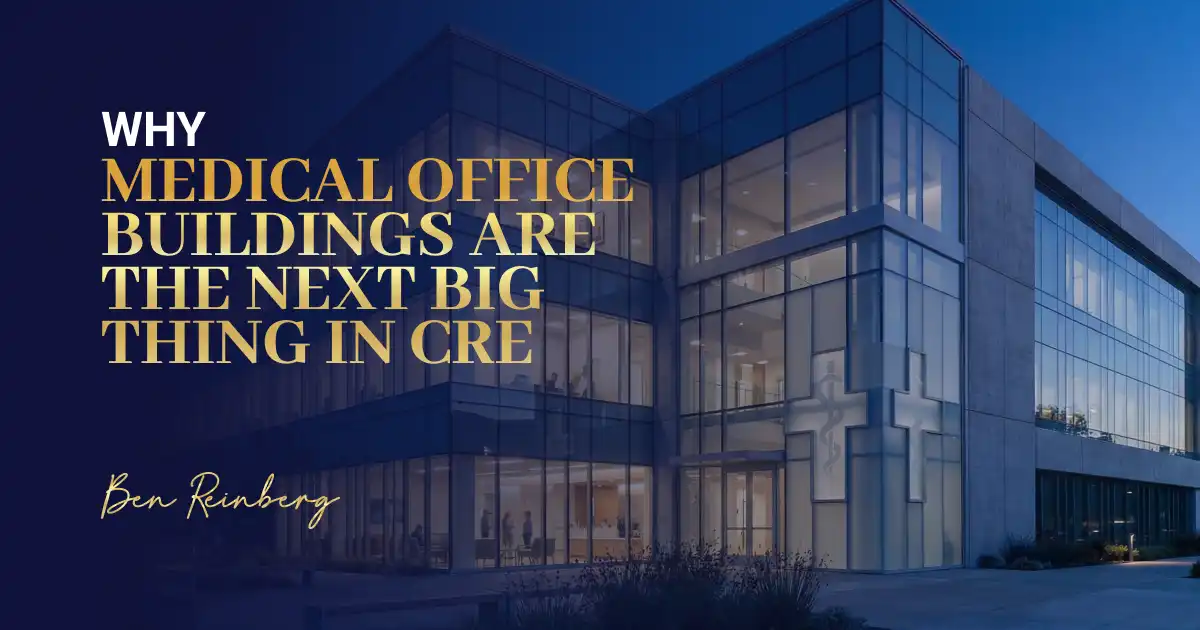
As outpatient care grows and healthcare decentralizes, MOBs remain one of the most dependable CRE assets in 2025 and are widely viewed as a best commercial property investment for stability, often backed by commercial real estate investment companies specializing in healthcare.Tenants often opt for primary care or specialists, signing long-term triple-net leases and rarely relocate due to high buildout costs and the need for patient continuity. MOBs represent a critical aspect of commercialreal estate industries and remain one of the most resilient types of commercial real estate investments providing long-term value.
Among top-tier commercial assets, investing in medical office buildings offers superior downside protection and institutional-grade tenant credit that standard commercial properties rarely match. With national occupancy above 90% (Revista, 2024) and average internal rates of return (IRRs) between 12 and 14%, MOBs offer stable cash flow, low turnover, and strong tenant retention, which is why they're consistently prioritized by the best commercial real estate investment companies. For investors seeking predictable income and operational simplicity, MOBs remain a resilient, fundamentals-driven asset class, central to the future of commercial real estate.
Industrial real estate is expected to remain a top-performing CRE asset in 2025, a trend the best investment firms for industrial real estate are already capitalizing on, driven by essential demand from e-commerce, food distribution, and manufacturing. Facilities like cold storage and last-mile delivery centers benefit from strategic proximity to logistics hubs, with markets such as Dallas and Phoenix reporting vacancy rates below 4%. This sector is a cornerstone of commercial real estate industries that continue to thrive in the current climate.
Tenants typically sign leases of 7–10 years and operational costs are low the kind of stability that makes industrial assets a favorite training ground for commercial real estate asset management jobs. With demand driven by core supply chain functions, not market cycles, industrial properties continue to offer investors predictable income and long-term resilience. As part of the future of commercial real estate, these properties will only grow in demand.
It comes down to reliable demand, long-term tenancy and resilience in the face of recession. These properties, ranging from dental and behavioral health clinics to veterinary practices, provide essential, local services. Tenants are often owner-operators who invest in their space and stay long term, reducing turnover and vacancy risk. Demand for these services remains steady regardless of market cycles, making them attractive in uncertain environments.
Investor interest is growing fast. According to CoStar, veterinary real estate transactions totaled nearly $850 million between 2022 and 2024, with cap rates averaging 6.9%, reflecting strong performance in a noncyclical niche uncovered through careful commercial real estate analysis and investments research.
In a market where stability matters more than speculation, veterinary and specialty healthcare properties offer a compelling blend of community-rooted demand and dependable income, earning their place among the top-performing CRE sectors today.
Commercial real estate investment companies are increasingly focused on flex retail centers in suburban markets, gaining strength as reliable income assets. These properties, often anchored by urgent care clinics, dental offices and fitness operators, serve consistent neighborhood demand, especially as hybrid work shifts daily activity away from city cores.
What gives them staying power is adaptability. With minimal reconfiguration, these centers can accommodate medical use, specialty services or wellness tenants' uses that are sticky and lease-stable. For investors seeking defensible locations and functional space, flex retail offers both relevance and rent durability in today’s market.
Workforce multifamily continues to leadperformance in 2025, particularly in secondary markets across the Southeast andMidwest, several of which rank among the best city to invest in real estate 2025 picks. Class B and Class C apartment communities meet essential housing demand for working renters, offering stable occupancy regardless of economic cycles.
These assets also present meaningful upside through targeted improvements, reinforcing their position as one of the best commercial property investments for passive income. Energy-efficient heating, ventilation, and air conditioning (HVAC) upgrades, security enhancements and cost-accessible amenities not only lift net operating income but also improve retention.
For investors, this segment offers a rare balance of consistent cash flow, long-term appreciation and social utility. That’s precisely why workforce housing has become a core play in portfolios prioritizing durable, needs-based performance.

Savvy investors don't guess about the best way to invest in commercial real estate;they filter for staying power. When you’re looking at a deal, it’s not just about what looks good today; it’s about whether that asset will hold up five, 10, 15 years from now because the best CRE investments are those with lasting potential. Here’s how experienced investors break it down.
Market Trends
Before anything else, ask yourself:Is the market growing or stalling? If you plan to invest in commercial real estate, you’re not just buying a building; you’re buying into its location. Look at the bigger picture: The commercial real estate industries that show steady demand, like healthcare and logistics, will continue to thrive in the future of commercial real estate.
Lease Terms
The lease is your income stream, so look for clarity, stability, and leverage. Properties with commercial real estate funds that have long, predictable leases offer a lower-risk investment with better financial stability.
Risk Profile
Every property carries risk; your job is to understand it before the closing table:
Portfolio Fit
Not every good deal is a good fit. Consider how the asset fits into your broader strategy:
ESG & Regulatory Readiness
ESG factors aren’t just checkboxes; they’re competitive advantages when done right:
A $500M+ portfolio wasn't built by chasingtrends. It was built with the discipline and precision you'd expect from the best commercial real estate portfolio optimization companies 2025 deep research, structured acquisitions, and a clearunderstanding of long-term performance drivers. If you're earlier in the journey, learning how to invest in commercial real estate the right way is where that discipline starts.
Essential services, adaptable locations, and durable demand. These key aspects continue to be crucial in commercial real estate industries and will define the future of commercial real estate.
With over 30 years of experience and a track record that places Alliance among the best commercial real estate portfolio optimization companies 2025 I've successfully guided billions in commercial real estate transactions, delivering a historical IRR of 28% through forward-thinking investments backed by in-depth market insights and data-driven strategies.
If you're ready to invest in commercial real estate and align your capital with long-term value, this is your moment to take the guesswork out of CRE investing.
The top-performing commercial real estate sectors right now are necessity-driven assets, specifically Medical Office Buildings (MOBs), industrial logistics warehouses, and workforce multifamily properties. These asset classes offer steady rental yields, low turnover, and strong downside protection against economic downturns and remote-work disruptions.
Current commercial real estate trends heavily favor essential-use assets and long-term net leases over traditional commodity office space. Institutional capital is flowing into specialized outpatient medical facilities, last-mile distribution centers, and grocery-anchored retail centers that benefit from structural demographic tailwinds and persistent consumer demand.
Industrial real estate offers extended lease terms (typically 5–10 years), minimal landlord capital expenditure (CapEx) obligations, and submarket vacancy rates consistently below national averages. Demand is anchored by regional supply chain logistics, e-commerce distribution networks, and specialized cold storage operations.
Analyzing multifamily assets requires evaluating population and job growth in the target submarket, current rent-to-income ratios, historical occupancy levels, and value-add renovation upside. Investors assess Net Operating Income (NOI) stability, debt coverage ratios (DSCR), and the property's ability to support rent adjustments in line with inflation.
The most reliable commercial real estate insights come from institutional transaction data and experienced sponsor operators with proven full-cycle track records. Investors should prioritize verified metrics—such as net absorption rates, lease renewal percentages, and cap rate spreads—over broad market speculation.